You may be sitting on a plane for hours, trying to focus while studying in a busy environment, or working in an office filled with conversations and background noise. In situations like these, your first instinct might be to turn up the volume until your music overpowers everything around you.
But louder sound does not necessarily mean a better listening experience. This is where noise-cancelling headphones can make a real difference.
Many modern headphones use Active Noise Cancellation (ANC) to reduce certain types of surrounding noise, helping you listen with fewer distractions without simply relying on higher volume levels.
However, seeing “ANC” in a product’s specifications does not automatically make it the best choice. Noise-cancelling performance varies significantly between models, while comfort, battery life, sound quality, design, and how you plan to use the headphones are equally important.
If you are searching for the best noise-cancelling headphones, this guide explains how ANC works, how it differs from passive noise isolation, which specifications matter most, and how to choose the right headphones for travel, studying, work, commuting, and everyday listening.
Looking for headphones that can help you listen with fewer distractions?
Explore the headphones and earbuds available on Cart and compare your options based on noise cancellation, battery life, design, and how you plan to use them.
What Are Noise-Cancelling Headphones?
Noise-cancelling headphones are designed to reduce the amount of external sound you hear while listening.
However, the term “noise cancellation” can refer to two different approaches:
Active Noise Cancellation (ANC):
Uses microphones and electronic processing inside the headphones to help reduce certain external sounds.
Passive Noise Isolation:
Relies on the physical design and fit of the headphones or earbuds to physically block some external sound from reaching your ears.
A good pair of headphones may combine both methods. The design provides passive isolation, while ANC helps reduce additional environmental noise.
For this reason, it is not enough to ask:
Do these headphones support ANC?
A better question is:
How well does the overall noise-reduction system suit the environment where I will actually use the headphones?
How Does Active Noise Cancellation Work?
ANC may sound technically complicated, but the basic concept is relatively straightforward.
The headphones use microphones to detect certain sounds in the surrounding environment. The system then processes those signals and generates an opposing audio signal designed to reduce your perception of that noise.
The process can be simplified as:
External Noise → Microphones → Audio Processing → Anti-Noise Signal → Reduced Perceived Noise
There is one important point to remember:
ANC does not make the world around you completely silent.
Its effectiveness depends on the type of noise, the quality of the headphones, the ANC implementation, and how well the headphones fit.
What Types of Noise Does ANC Handle Best?
ANC systems are particularly useful for relatively consistent, repetitive sounds, such as:
-
Airplane engine noise.
-
Train and public transportation noise.
-
Air-conditioning hum.
-
Continuous office background noise.
-
Certain types of background noise while traveling.
Sudden or rapidly changing sounds, such as nearby conversations or a door closing, may remain audible to varying degrees.
So, when buying noise-cancelling headphones, do not expect every sound around you to disappear.
Do you frequently use headphones while traveling or commuting?
When comparing options on Cart, look beyond ANC. Comfort, battery life, portability, and fit can become just as important during extended use.
ANC vs. Passive Noise Isolation: What Is the Difference?
The two terms are sometimes used as if they mean the same thing, but they work differently.
|
Factor |
Active Noise Cancellation |
Passive Noise Isolation |
|
How it works |
Electronic noise processing |
Physical headphone design and seal |
|
Requires power |
Yes |
No |
|
Uses microphones |
Yes |
No |
|
Continuous noise |
Can be highly effective depending on the system |
Reduces some noise depending on design |
|
Affected by fit |
Yes |
Significantly |
|
Found in |
ANC-enabled headphones |
To varying degrees in most headphone designs |
Do You Need Both?
Good passive isolation combined with effective ANC can provide a better overall experience than relying on either method alone.
With over-ear headphones, the ear cups cover your ears and naturally block some external sound.
With earbuds, choosing the correct ear-tip size and achieving a proper seal can significantly affect noise isolation.
That means fit is part of noise-cancelling performance, not simply a matter of comfort.
ANC vs. ENC: What Is the Difference?
This is one of the most common sources of confusion when shopping for headphones.
ANC – Active Noise Cancellation
ANC primarily aims to reduce some of the external sounds you hear while wearing your headphones.
ENC – Environmental Noise Cancellation
ENC is commonly used to describe processing technologies designed to reduce the effect of environmental noise picked up by the microphones during calls.
In simple terms:
ANC → Helps you hear less surrounding noise.
ENC / Microphone Noise Reduction → Helps reduce environmental noise captured by the microphone during calls.
Therefore, a headset that supports ENC does not necessarily provide Active Noise Cancellation for listening, and vice versa.
If calls are one of your main priorities, do not judge the headphones by ANC alone. Microphone quality and calling features should be evaluated separately.
What Is Transparency Mode?
There are situations when you do not want to block out the world around you.
You may need to hear an announcement at the airport, talk to someone beside you, or remain more aware of your surroundings while walking.
This is where Transparency Mode, sometimes called Ambient Mode, becomes useful on supported headphones.
Instead of trying to reduce external noise, the headphones use their microphones to let you hear more of your surroundings without removing them.
You can think of the listening modes this way:
ANC Mode: When you want to reduce external noise and focus.
Transparency/Ambient Mode: When you need to hear your surroundings.
Normal Mode: When you do not need either feature.
Having multiple listening modes gives you more flexibility, especially if you use your headphones in different environments throughout the day.
How to Choose the Best Noise-Cancelling Headphones
ANC is only the starting point. Before choosing a pair of headphones, compare the following factors.
1. ANC Performance
Not all Active Noise Cancellation systems perform equally.
Two headphones may both advertise ANC, yet their ability to handle surrounding noise can differ considerably.
For that reason, do not use “ANC Supported” as your only measure of noise-cancelling quality.
Think about your environment first.
Are you trying to reduce:
Airplane noise?
Public transportation?
Office noise?
Coffee-shop background sound?
The more clearly you define the problem, the easier it becomes to choose the right headphones.
2. Passive Isolation and Fit
Fit can make a noticeable difference.
With earbuds, incorrectly sized ear tips may allow more external noise in and reduce the effectiveness of the overall isolation.
With over-ear headphones, the design of the ear cups, cushions, and the seal around your ears affects both passive isolation and comfort.
So, do not treat fit and design as purely aesthetic considerations.
3. Sound Quality
The goal is not only to reduce noise. You still need to enjoy what you are listening to.
Compare factors such as:
-
Overall sound clarity.
-
Bass response.
-
Midrange.
-
Treble.
-
EQ support.
-
Sound customization through a companion app.
-
Sound performance while ANC is enabled.
Headphones that offer powerful noise cancellation but a sound profile you dislike may not be the right choice for you.
4. Transparency or Ambient Mode
If you frequently use headphones outside your home, this feature can be particularly useful.
Instead of removing your headphones whenever you need to talk to someone or hear what is happening around you, supported models allow you to switch to an ambient listening mode.
5. Comfort
If you are searching for the best noise-cancelling headphones for travel, studying, or work, comfort should be one of your priorities.
Consider:
-
Headphone weight.
-
Cushion materials.
-
Clamping pressure.
-
Ear-cup size.
-
Ear tips on earbuds.
-
Heat buildup during extended listening sessions.
Headphones may feel comfortable for the first ten minutes, but the real test comes after an hour or more of continuous use.
6. Battery Life With ANC Enabled
This is an important specification that is easy to overlook.
A manufacturer may advertise impressive battery life, but the figure can change when ANC is enabled.
If noise cancellation is one of the main reasons you are buying the headphones, look specifically for:
Battery Life With ANC On
Then compare that figure with how long you typically use your headphones each day.
7. Fast Charging
Fast charging can be particularly valuable if you travel frequently or use your headphones every day.
On some models, a short charging session can provide several additional hours of listening, reducing the chance of finding your headphones out of power before a journey or meeting.
8. Microphone Quality
Excellent ANC does not automatically mean an excellent microphone.
If you also plan to use the headphones for calls, check:
-
Microphone quality.
-
Voice pickup.
-
Microphone noise reduction.
-
Call controls.
A pair of headphones may perform exceptionally well at reducing the noise you hear while offering only average voice capture during calls.
9. Multipoint Connectivity
If you work on a laptop while keeping your smartphone nearby, Multipoint can be a useful feature on supported headphones.
It allows compatible headphones to maintain connections with more than one device, making it easier to move between work and calls.
10. Companion App and Controls
Some headphones offer companion apps that let you adjust:
-
ANC settings.
-
Ambient Sound.
-
EQ.
-
Touch controls.
-
Firmware updates.
-
Additional model-specific features.
If you prefer to customize your listening experience, app support may be worth considering.
Not every ANC headset is designed for the same user.
Decide where you will use your headphones most, then compare the options on Cart based on noise cancellation, comfort, battery life, and sound rather than focusing on one feature alone.
Earbuds vs. Over-Ear Headphones: Which Is Better for Noise Cancellation?
The better option depends more on your lifestyle than on one design being universally superior.
ANC Earbuds
ANC earbuds are usually compact and easy to carry, making them convenient for pockets, bags, commuting, and everyday use.
However, their overall isolation performance can depend heavily on selecting the correct ear tips and achieving a secure seal.
Over-Ear Noise-Cancelling Headphones
Over-ear headphones cover the entire ear, and their design can provide additional passive isolation alongside ANC.
Some users may find them particularly comfortable for long flights, extended study sessions, or hours of office work.
However, they are larger and less portable than earbuds.
|
Factor |
ANC Earbuds |
ANC Over-Ear Headphones |
|
Portability |
Excellent |
Lower |
|
Size |
Compact |
Larger |
|
Passive isolation |
Highly dependent on fit |
Can benefit from full ear coverage |
|
Battery |
Earbuds + charging case |
Often a larger built-in battery |
|
Daily commuting |
Excellent |
Good |
|
Long journeys |
Very good |
Excellent for some users |
|
Comfort |
Depends on your ears and fit |
Depends on weight and cushions |
So, the right question is not:
Which type blocks more noise?
Instead, ask:
Which type better suits the way I use headphones for extended periods?
Best Noise-Cancelling Headphones by Use Case
Best Noise-Cancelling Headphones for Travel
Frequent travelers should look for a balance of:
ANC + Comfort + Battery Life + Fast Charging + Portability
Noise cancellation is important, but uncomfortable headphones can quickly become frustrating during a long journey.
Battery life should also be sufficient to get you through longer trips without constantly searching for a charger.
Best Noise-Cancelling Headphones for Air Travel
Airplanes are one of the environments where ANC can be particularly useful because of the relatively consistent engine noise.
For long flights, however, consider comfort, weight, and battery life alongside ANC performance rather than treating noise cancellation as the only priority.
Best Noise-Cancelling Headphones for Studying
If you study in a library, university accommodation, coffee shop, or busy home, noise-cancelling headphones may help reduce some of the distractions around you.
Focus on:
Comfort + ANC + Battery Life + Sound Quality
This is particularly important when your study sessions last several hours.
Best Noise-Cancelling Headphones for Work
For office use, your priorities may become:
ANC + Comfort + Multipoint + Microphone + Battery
Multipoint can be useful if you regularly move between a laptop and smartphone, while microphone quality should be assessed separately if you attend frequent meetings.
Best Noise-Cancelling Headphones for Commuting
For daily commuting, prioritize:
ANC + Portability + Secure Fit + Battery
Earbuds can be particularly attractive because they are easy to carry, although some users may prefer the fit and isolation of over-ear headphones.
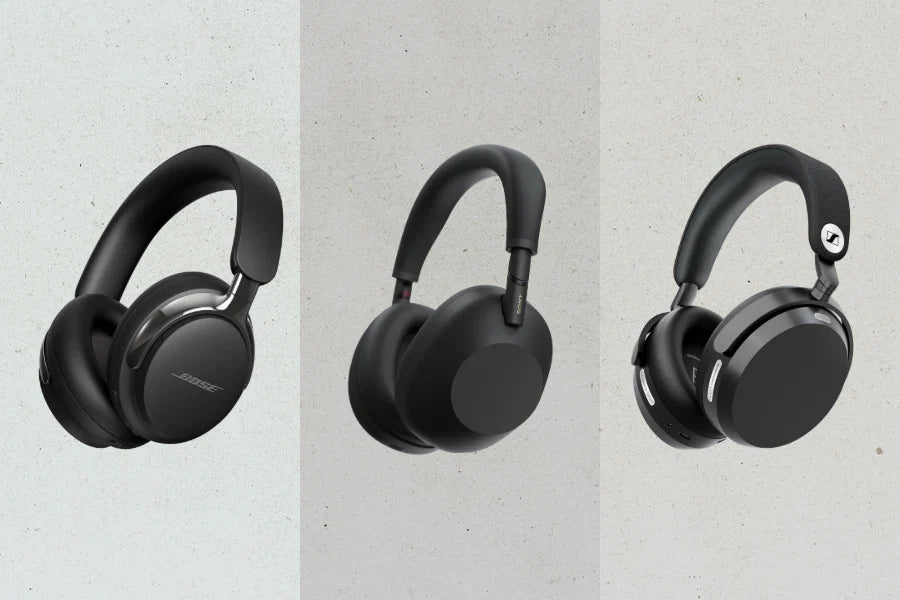
Best Noise-Cancelling Headphones Available on Cart
When shopping for noise-cancelling headphones, it is better to compare products that specifically support noise-reduction technologies instead of choosing solely by brand recognition.
One option worth considering on Cart is:
Sony Noise Canceling Wireless Headphones: An Option for Travel and Busy Environments
If reducing surrounding noise is one of your main priorities, the Sony Noise Canceling Wireless Headphones are worth comparing.
This model combines an over-ear design, wireless connectivity, and noise-cancelling functionality, making it relevant for users who want headphones for travel, commuting, or busy work environments.
The over-ear design itself can provide a degree of passive isolation around the ears, while the noise-cancelling functionality is designed to further reduce certain surrounding sounds.
Best for you if: You want over-ear wireless headphones for travel or environments with consistent background noise.
Looking for noise-cancelling headphones for travel or everyday listening?
Explore the Sony Noise Canceling Wireless Headphones on Cart and review the noise-cancelling, battery, and connectivity specifications before making your decision.
ANC Earbuds Available on Cart
If you prefer something smaller and easier to carry, ANC earbuds may be a better option for daily commuting and everyday use.
When comparing ANC earbuds, pay particular attention to:
-
ANC performance.
-
Ear tips and fit.
-
Transparency Mode.
-
Earbud and charging-case battery life.
-
Microphone features.
-
Water resistance, where relevant.
-
Fast charging.
Best for you if: You want noise cancellation in a compact form factor that is easy to carry throughout the day.
Prefer earbuds instead of full-size headphones?
Explore the earbuds available on Cart and compare ANC-enabled models based on fit, battery life, noise cancellation, and additional features.
What Should You Compare Before Choosing a Model?
Do not compare headphones based on the words “Noise Cancelling” alone.
Use this formula instead:
ANC → Fit → Comfort → Battery → Sound → Additional Features → Price
This helps you evaluate the complete experience rather than buying a product based on a single specification.
Ready to compare your options?
Browse Noise Cancelling headphones on Cart and choose the headphones or earbuds that best match your needs and budget.
Are Noise-Cancelling Headphones Worth It?
The answer depends largely on where you use your headphones.
Noise-cancelling headphones can be particularly useful if you:
-
Frequently travel by plane.
-
Commute on public transportation every day.
-
Work in a busy office.
-
Study in environments with frequent distractions.
-
Wear headphones for long periods outside your home.
If most of your listening happens in a quiet room, however, good passive isolation may already be enough for your needs. In that case, you may prefer to spend your budget on sound quality, battery life, or comfort rather than more advanced ANC.
Does Stronger ANC Mean Better Headphones?
No.
A pair of headphones may excel at reducing external noise but still be unsuitable for you because of its comfort, sound profile, battery life, or design.
A better way to assess overall value is:
ANC + Sound Quality + Comfort + Battery + Fit + Features + Price = Overall Value
For example, someone wearing headphones continuously during a five-hour journey may value comfort and battery life almost as much as ANC.
Someone who uses headphones for a 30-minute commute may care more about portability and secure fit.
The best noise-cancelling headphones are therefore the headphones that best fit your use case, not necessarily the model that wins on one specification.
Do Noise-Cancelling Headphones Block All Sounds?
No, and this is one of the most important things to understand before buying.
ANC does not function like a switch that makes the world around you completely silent.
It can be highly effective at reducing certain types of continuous noise, but it may not completely eliminate:
-
Nearby conversations.
-
Children’s voices.
-
Sudden knocks or impacts.
-
Alerts.
-
Rapidly changing sounds.
The result also depends on the headphones, their fit, and your environment.
It is therefore more accurate to think of ANC as a technology for reducing noise rather than completely eliminating it.
Is Turning Up the Volume an Alternative to Noise Cancellation?
No.
Increasing the volume simply makes your music, podcast, or other audio louder relative to your surroundings. It does not perform the same function as Active Noise Cancellation.
For that reason, turning the volume up should not be treated as a direct substitute for noise-reduction technology.
If your main problem is listening in noisy environments, choosing headphones with isolation and noise-cancelling performance suited to your use is a more relevant solution than simply relying on higher volume.
Should You Keep ANC On All the Time?
Not necessarily.
ANC may be particularly useful during:
-
Travel.
-
Public transportation.
-
Study sessions in busy environments.
-
Work in spaces with continuous background noise.
In a quiet environment, however, you may not need it.
Transparency or Ambient Mode may also be more appropriate when you need greater awareness of your surroundings.
Because ANC processing also consumes power, using the right listening mode for each situation may help you manage battery life more effectively.
Common Mistakes When Buying Noise-Cancelling Headphones
Choosing Headphones Simply Because They Have ANC
The presence of ANC alone does not tell you how effectively the technology is implemented.
Expecting Every Sound to Disappear
ANC reduces noise. It does not create complete silence.
Confusing ANC With ENC
ANC primarily affects what you hear, while ENC usually refers to processing designed to reduce environmental noise picked up by microphones during calls.
Ignoring Passive Noise Isolation
The physical design and fit of the headphones can play a major role in overall isolation.
Using the Wrong Ear Tips
This is particularly important with earbuds, as the wrong size can affect both comfort and isolation.
Comparing Battery Life Without Checking ANC Usage
Check whether the advertised figure applies with ANC enabled or disabled.
Sacrificing Comfort for Stronger Noise Cancellation
This can become a major issue if you wear your headphones for several hours at a time.
Assuming ANC Means a Better Microphone
Call quality and microphone performance should be evaluated separately.
Ignoring Transparency Mode
Depending on your routine, it may become one of the features you use most frequently.
Paying for Features You Do Not Need
Start with your actual use case, then decide which specifications are worth paying for.
How to Choose Noise-Cancelling Headphones in One Minute
Before buying, ask yourself these ten questions:
-
Where will I use the headphones most? Travel, studying, work, or commuting?
-
Do they actually support ANC?
-
Does the design provide a secure fit and good passive isolation?
-
Do I need Transparency or Ambient Mode?
-
How long does the battery last with ANC enabled?
-
Are the headphones comfortable enough for extended use?
-
Would earbuds or over-ear headphones suit my routine better?
-
Do I need Multipoint for switching between devices?
-
Do I also need a strong microphone for calls?
-
Are the additional features worth the price for my actual needs?
Answering these questions can make comparing different models significantly easier.
Frequently Asked Questions About Noise-Cancelling Headphones
What Are the Best Noise-Cancelling Headphones?
There is no single pair that is best for everyone. The right choice depends on ANC performance, comfort, battery life, fit, sound quality, your typical environment, and your budget.
What Is the Difference Between ANC and Noise Isolation?
ANC uses microphones and electronic processing to help reduce certain external sounds. Passive noise isolation relies on the physical design and fit of the headphones to block some sound from reaching your ears.
What Is the Difference Between ANC and ENC?
ANC primarily aims to reduce some of the external noise heard by the listener. ENC commonly refers to technologies designed to reduce environmental noise captured by microphones during calls.
Do ANC Headphones Block All Noise?
No. ANC tends to work better with certain types of noise, while sudden or rapidly changing sounds may remain audible.
Are Noise-Cancelling Headphones Good for Studying?
They can help reduce certain distractions in busy environments. Comfort and battery life are also important if you plan to wear them during long study sessions.
Is Noise Cancellation Useful on Airplanes?
Yes. ANC can be particularly useful for reducing some of the continuous background noise associated with airplane engines, which is one reason noise-cancelling headphones are popular among travelers.
Are Earbuds or Over-Ear Headphones Better for Noise Cancellation?
It depends on the specific model, fit, and use case. Earbuds are more portable, while over-ear designs can provide additional passive isolation by covering the ears.
Does ANC Affect Battery Life?
Yes. ANC processing requires power, so battery life can differ depending on whether noise cancellation is enabled or disabled.
Does ANC Improve Call Quality?
ANC may help you hear the other person more clearly in noisy surroundings, but it does not automatically make your microphone or voice clearer to them.
What Is Transparency Mode?
Transparency Mode uses the headphones’ microphones to allow more surrounding sound to reach you, helping you remain aware of your environment without removing the headphones.
Do More Expensive Headphones Have Better Noise Cancellation?
Not always. Price may reflect noise-cancelling performance, sound quality, materials, comfort, and additional features, but actual specifications and performance should be compared rather than relying on price alone.
Are Noise-Cancelling Headphones Worth Buying?
If you regularly use headphones while traveling, commuting, working, or studying in busy environments, ANC can be a very useful feature. If you mainly listen in quiet places, it may be less important.
Conclusion: How to Choose the Best Noise-Cancelling Headphones
Finding the best noise-cancelling headphones should not simply mean choosing the model with the strongest ANC or the highest price.
Start with your actual use case.
If you travel frequently, noise cancellation, comfort, and battery life are major priorities. If you use your headphones while commuting, portability and fit may become more important. For work, you may also need Multipoint connectivity and a capable microphone, while long study sessions make comfort and battery life particularly important.
You can simplify your decision using this formula:
Use Case → ANC → Fit → Comfort → Battery → Features → Price
This approach helps you choose the headphones that provide the best experience for your actual routine rather than simply choosing the model that looks strongest on paper.
Ready to choose your next pair?
Explore Noise Cancelling headphones available on Cart, compare noise cancellation, battery life, comfort, and additional features, and choose the model that best fits your needs and budget.